
Where New York City Directories Survive
There is no uniform statewide run. Local publishers, telephone companies, chambers, and commercial firms issued volumes for particular places, so the town and year matter. The table maps documented collection routes, not complete annual runs. Confirm whether a cataloged item is bound, on microfilm, digitized, or reference-only.
| Collection | Years found | Holding place | How to reach it |
|---|---|---|---|
| New York City name directories | Surviving run begins in 1786; Trow examples include 1879; extensive 19th- and 20th-century holdings | NYPL research catalog and Milstein collections | Catalog, on-site research, and selected digital material; runs are not guaranteed unbroken |
| Directories from cities and towns statewide | Exact years vary by catalog record and locality | New York State Library Research Library | Catalog and reference service; ask for place, year, format, and call number |
| Telephone and reverse directories | Late 19th and 20th centuries, with local gaps | State Library, NYPL, and local libraries | Ask about bound books, microfilm, and licensed database access |
| Sanborn fire-insurance maps | Urban coverage and map years vary by place | NYPL Map Division and local libraries | Search the catalog by municipality and address; confirm sheet and edition |
| New York State census substitutes | State census series runs 1825–1925, with uneven survival | Libraries, archives, and surviving county copies | Check the exact locality and schedule; availability differs by year |
A rural town may have a county book, phone directory, local history, or tax roll instead. A missing year can reflect publication choices, collection gaps, or another format. Record the edition and territory before treating an absent name as meaningful.
New York Library and Archives Roles
The New York State Archives explicitly says it does not hold these volumes and routes researchers to the State Library, which has a large statewide collection. Check the catalog for the exact locality, years, and format rather than assuming the holdings are continuous. The Archives remains useful for government records and other historical research assistance.
For a hard-to-find year, send the State Library a locality, year, and name- or address-search need. Reference staff: 518-474-5355 or refserv@nysed.gov. Access includes in-person, phone, mail, email, catalog, and interlibrary loan when an item can circulate. Ask whether a volume is reference-only or on microfilm before visiting.
The Archives directory answer makes the custody split explicit; its broader research-assistance guide helps route other historical questions to the right state or local collection.
The State Library's catalog is the statewide starting point; use its record to confirm a town and year shown by this research-route image.
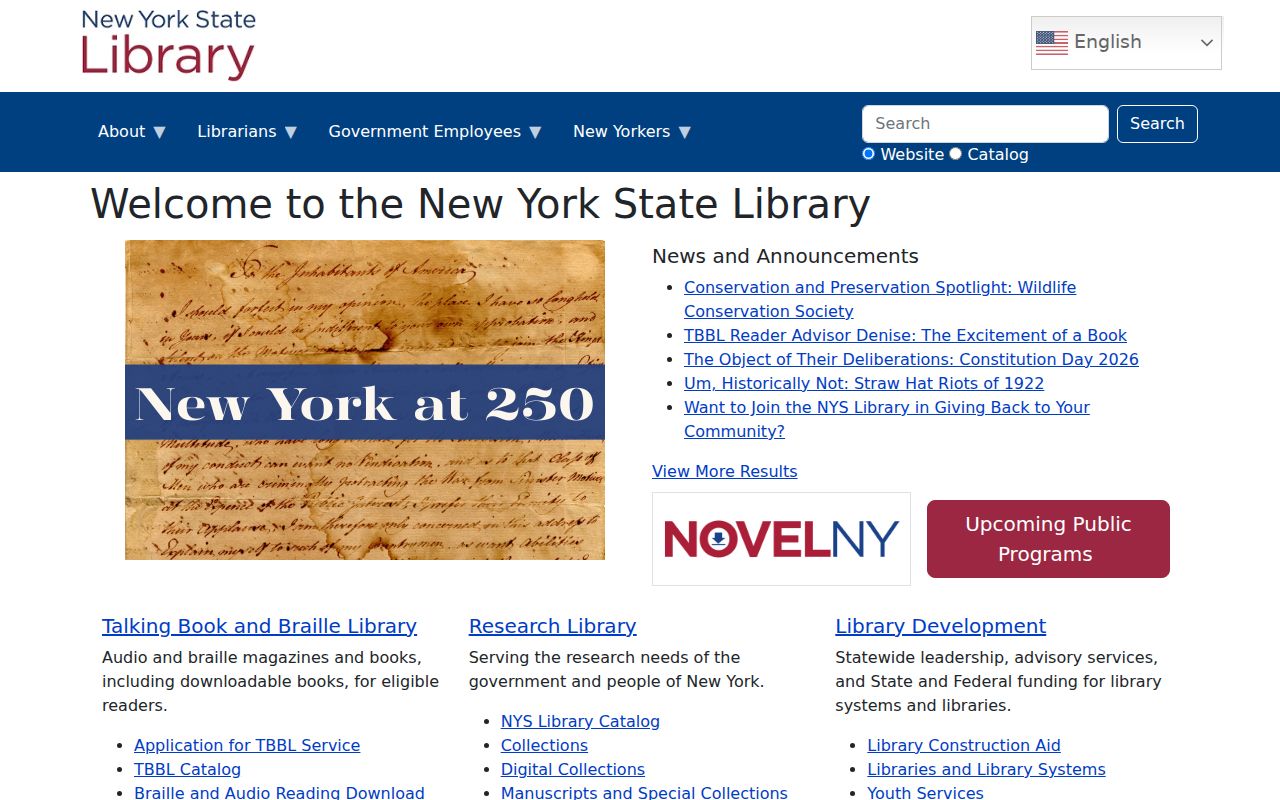
A reference copy may not circulate. Record its call number and access conditions before arranging a visit.
New York City Directories Online
NYPL holds extensive printed address directories from New York's 19th and 20th centuries, but not a guaranteed unbroken run. Find a year and edition in the research catalog, then check Digital Collections for scanned pages. Some licensed databases require a library card or on-site access.
Search by title and year, then inspect publisher notes and older ward or place labels. If no scan exists, NYPL's physical collection or a local library's microfilm may still provide access.
| 1786 | The surviving NYC run begins with the New York Directory. |
|---|---|
| 1879 | A documented Trow directory example illustrates the later publisher runs. |
| 19th–20th centuries | NYPL holds extensive material, but the available years are not guaranteed to form an unbroken series. |
| Later local editions | Telephone and reverse volumes have place-specific gaps; the last surviving year must be checked in the catalog. |
NYPL Digital Collections helps locate scans; confirm the edition, year, and page that covers the address.
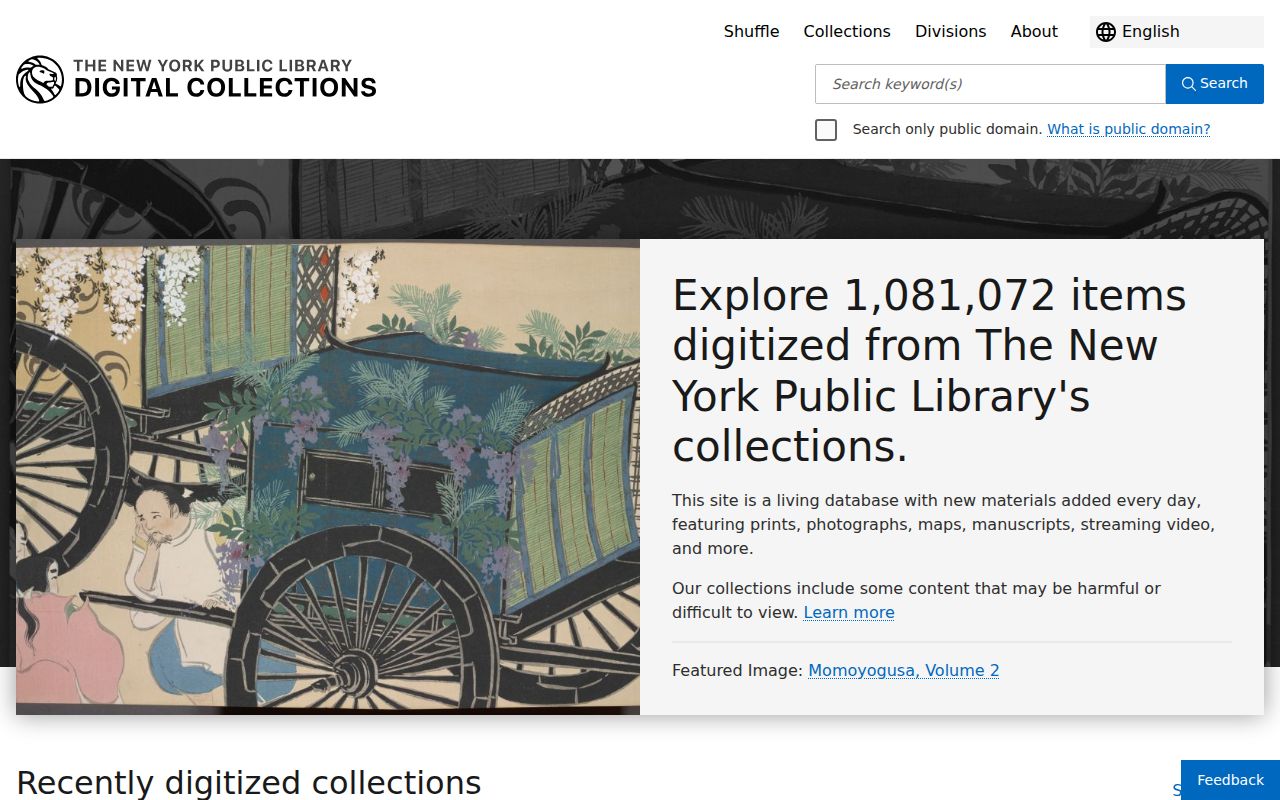
A catalog snippet is not a transcription; request or inspect the full item.
Decode a New York City Directory Entry
An entry can be short, but several details work together. Do not assume every volume uses the same layout or marks; use the publisher's key and inspect the page around the result. The fields below describe information that a directory can contain, not a claim that each item appears in every edition or in a particular sample entry.
| Name | Surname and given name or initials; spelling may differ from another year |
|---|---|
| Occupation or business | Trade, employer, firm, proprietor, or business address when recorded |
| Street details | House number, street, and sometimes floor or room |
| Household notation | Spouse or widow notation, such as “wid,” when the publisher used it |
| Cross-reference | A “see” note may redirect to a business, another name, or another entry |
An entry may describe a residence or business. Preserve its wording; each annual volume is a dated snapshot, not proof of current address, ownership, or family relationships.
- Criss-cross directory
- A reverse section arranged by street and number, so a known address can lead to an occupant or business name.
- Householder index
- An alphabetical list of residents or household heads, usually separate from the street-ordered pages.
- Abbreviation key
- The publisher's guide to short marks. Research notes common forms such as “r,” “h,” “boards,” “wid,” “rem,” and “same.” “Wid” signals a widow notation and “boards” a boarding notation; check the volume's own key for the other marks.
Reverse New York City Directories by Address
A reverse section changes the order of the search: start with the street and number, then read the listed occupant or business. This can help when a family story supplies an address but no surname, or when a house's earlier owner is not known. It does not establish that the named person owned the property, and a business listing may describe a shop rather than a home.
Telephone directories offer another address clue, but they generally describe subscribers. Lodgers and other non-subscribers may not appear, and a telephone listing can reflect a business account or a different person at the same address. Later reverse books can be city-specific and unevenly preserved. If a volume has both a name section and a street section, search each one and note whether the two entries agree.
Copy the street number, floor or room, name, and nearby entries. Those details can distinguish a similarly named street or explain why an address appears under a business.
Trace New York City Directories Across Years
For family history, a sequence of annual snapshots can show when a name first appears, when the address changes, and when the record trail ends. Search variants rather than relying on one spelling: initials, maiden and married surnames, hyphenation, accents, and phonetic forms can all matter in New York's multilingual record history. A missing year is a research gap, not evidence that a household disappeared.
- Choose one known name, address, and year, then check the volume's geographic coverage and spelling conventions.
- Search the alphabetical entries and any reverse section; capture the page number and surrounding names.
- Repeat across available years and mark first and last appearances, moves, and “rem” or “same” notes.
- Pair a directory year with the nearest available state or federal census, then compare the household and address evidence.
- Check a newspaper, vital record, voter list, tax or assessment entry, permit, or deed for a separate dated clue.
- If the street name or number changed, consult dated atlases, municipal or annexation maps, or local historical files before concluding the household moved.
Directory and census years do not form a continuous register. A household may have moved between dates, and census enumeration areas do not follow a directory's street order. Keep each source's date and purpose beside the finding until a match is corroborated.
New York City Directories and Census Gaps
New York's state census series spans 1825 through 1925, but survival and access vary substantially by place and year. The 1911 Capitol fire destroyed many state records, making surviving local copies and substitute sources especially valuable. The 1890 federal census was lost, so researchers cannot fill that decade by expecting a complete federal schedule. Check the specific locality, not just the statewide date range, before planning a search.
The New York State Archives research guide helps route records questions, while the State Library and local libraries may have microfilm, catalogs, or reference paths that are not online. FamilySearch's New York land-record collection covers a different record type, 1630–1975; separate county naturalization collections cover 1791–1980. Images may require an account, library, or FamilySearch Center. Do not treat the deed collection as a directory or census index.
The Archives research-assistance page explains where state records, microfilm, and local-government questions should go. Its screenshot is a routing aid; the relevant directory itself is held through the library or a local collection, not by the Archives.
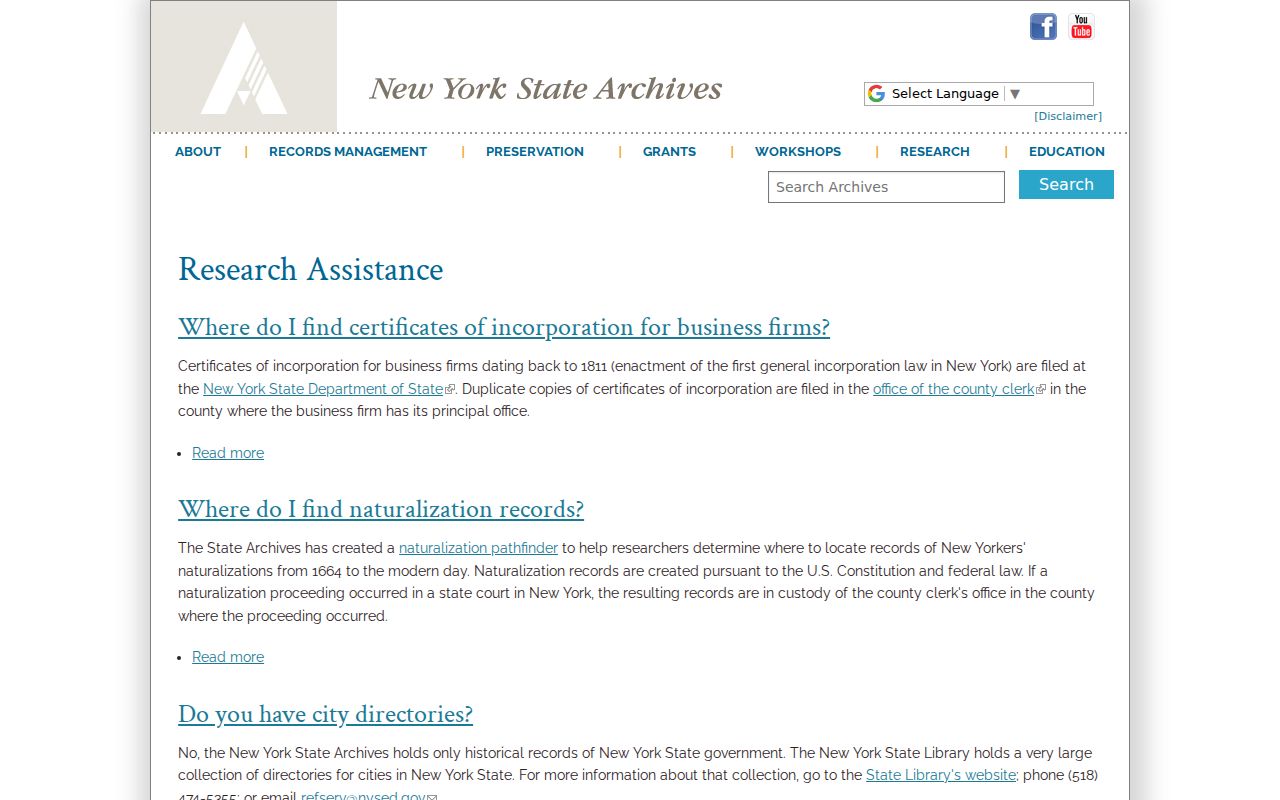
Where a state census schedule is missing, preserve the gap in your notes and turn to town or county copies, directories, tax records, newspapers, church or cemetery registers, and other local materials documented for that place.
New York Maps and Street Names
Atlases and Sanborn fire maps can resolve renumbering, annexation, or street-name changes. NYPL collections include New York City maps; local libraries may hold maps for other towns. One NYC site's guide cites 1891, 1908, 1935, and 1944–2007. Those dates apply to that site alone, not a statewide or citywide run.
Compare the map's sheet, date, block, and neighboring addresses with the entry. It can locate a building footprint but not every occupant. Ask a local library for its own atlas and Sanborn coverage, and record both historic municipality and modern label; New York City's 1898 five-borough consolidation is one reason the catalog route can change.
Buffalo Phonebook Preservation in New York
A preservation project offers a concrete example of why a missing web scan does not mean a directory is gone. A New York State Library conservation grant covered microfilming phonebooks and directories for Buffalo and nearby suburbs, demonstrating a local-library route for Western New York address research. It does not establish that every Buffalo year was filmed or that the same coverage exists elsewhere in the state.
When a catalog shows a physical or microfilm holding but no scan, ask the library about reader access, copying, and interlibrary loan. For a suburban address, check whether a title covers Buffalo proper, a nearby municipality, or a regional telephone territory; exchange boundaries may differ.
The State Library's preservation-grant awards document this Buffalo-area example. Local holdings remain specific to each community. For a single address, the New York previous residents guide shows how to connect an occupant clue to separate ownership and census records.